
Most data center conversations still start and end with three metrics: speed, megawatts, and initial cost per watt. Those numbers matter, but evaluating a facility solely on its day-one handoff misses the point entirely. A data center is an ongoing industrial system. It has to perform through requirements and planning, design and engineering, procurement, factory integration and testing, site preparation, commissioning, daily operations, technology refreshes, densification, and eventual expansion.
If a design doesn’t account for the entire infrastructure lifecycle, the facility pays for it later in costly change orders and stranded capacity. Steve Altizer, President and CEO of Compu Dynamics and Compu Dynamics Modular, unpacked this shift on a recent episode of the Data Center Frontier Show podcast. His main point: AI workloads are tearing up the standard real estate playbook, forcing the industry to build data centers less like commercial office spaces and more like high-density industrial plants.
That creates a fundamental lifecycle challenge. The physical infrastructure may be expected to operate for decades, while the compute technology inside it can change much faster. As GPU platforms evolve, rack densities, power requirements, cooling architectures, and network requirements evolve with them. The infrastructure has to be designed to accommodate that change without forcing major reconstruction every time the technology takes another step forward.
Day One Is Just the Starting Line
The biggest trap in infrastructure planning is treating commissioning like the finish line. In reality, turning the power on is just phase one. As rack densities move from traditional enterprise levels into increasingly dense AI deployments, the underlying power and cooling architectures must be able to adapt without forcing operators into complex live-environment retrofits. When teams design only for day-one speed, they often build themselves into a corner. A true lifecycle strategy starts with a practical question: What will this infrastructure need to support as the compute platform changes over the next five to ten years?
Answering that changes how you approach:
- Integrating liquid cooling alongside existing air systems
- Structuring electrical distribution so capacity can scale incrementally as compute demands grow
- Factory-testing critical subsystems before they ever reach the job site to identify integration issues earlier and reduce field modifications
Bridging the Silos Between the Factory and the Field
Engineering, offsite manufacturing, on-site trades, and facility operations can easily become disconnected. When they do, coordination issues that could have been resolved during design or factory integration often surface later in the field, where they are more difficult and expensive to address.
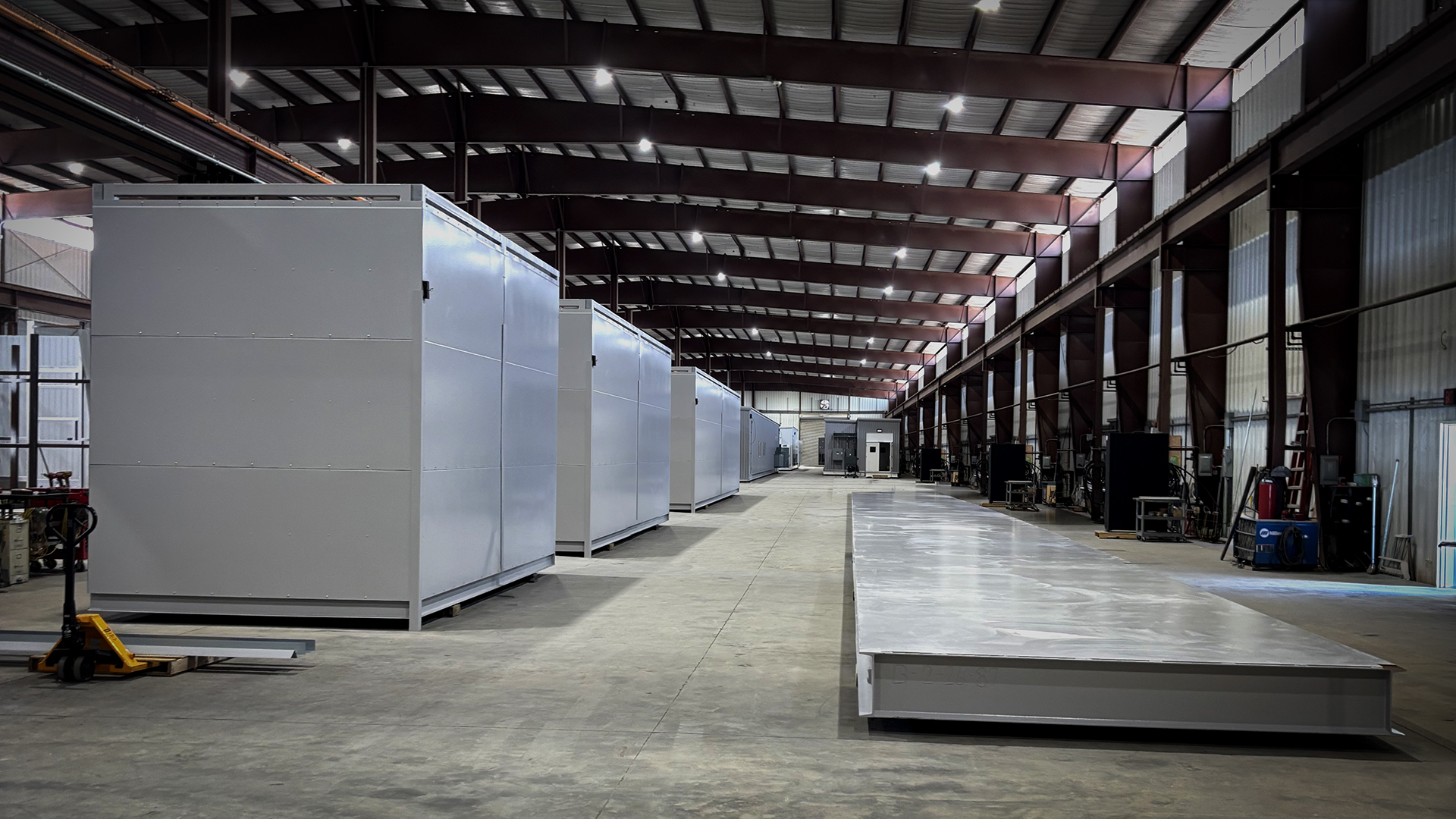
This is where modular delivery can fundamentally change the execution model. By coordinating design, fabrication, assembly, testing, transportation, and site integration from the beginning, more of the infrastructure can be completed and validated in a controlled factory environment while site work progresses in parallel. The goal is not simply to move construction offsite. It is to create a more coordinated and repeatable path from engineering through deployment.
The Life After Commissioning
Commissioning marks the transition into the longest phase of the data center lifecycle: operations. The facility may operate through multiple generations of compute, requiring maintenance, upgrades, reconfiguration, and potentially significant increases in density along the way. Designing for those realities from the beginning can make future changes easier to execute without unnecessarily disrupting live workloads.
For AI infrastructure, that also means considering how power, cooling, and IT systems may need to be upgraded or reconfigured as new generations of compute are introduced.
End-to-end planning creates a more coordinated path from initial design through deployment, operations, and future upgrades.
Click here to listen to Steve’s full conversation on the Data Center Frontier Show. Contact the team at Compu Dynamics Modular to discuss your next build.
Frequently Asked Questions
A modular data center is a purpose-built, pre-engineered infrastructure system (covering power distribution, cooling, and IT enclosures) fabricated and tested inside a factory before being shipped to the site. Rather than building every system from scratch in the field, modular delivery treats critical infrastructure like an integrated industrial assembly, reducing field labor and allowing integrated systems to be tested and validated earlier in the deployment process.
Modular delivery allows factory fabrication and integration to progress in parallel with site preparation, civil work, and other on-site activities. Rather than waiting for one phase to finish before the next begins, these workstreams can move forward concurrently, helping shorten the overall project schedule.
It also shifts more assembly, integration, and testing into a controlled factory environment, where issues can be identified and resolved earlier rather than in the field. Depending on project scope, site conditions, and equipment availability, this approach can significantly reduce deployment time compared with a fully sequential construction process.
As AI rack densities increase, air cooling alone can become impractical, driving greater adoption of direct-to-chip liquid cooling and hybrid air/liquid architectures. Facility design must also account for higher electrical loads, greater heat rejection requirements, fluid distribution, heavier racks, and infrastructure that can adapt as future generations of compute evolve.
Commissioning is the beginning of the operational lifecycle, not the end of the project story. Over time, operators will maintain equipment, replace components, introduce new generations of compute, increase density, and potentially expand capacity. Designing for serviceability, upgrades, and reconfiguration from the beginning can reduce the complexity and disruption associated with those changes.
